
Live Casino vs Standard Online Games: What’s the Difference?
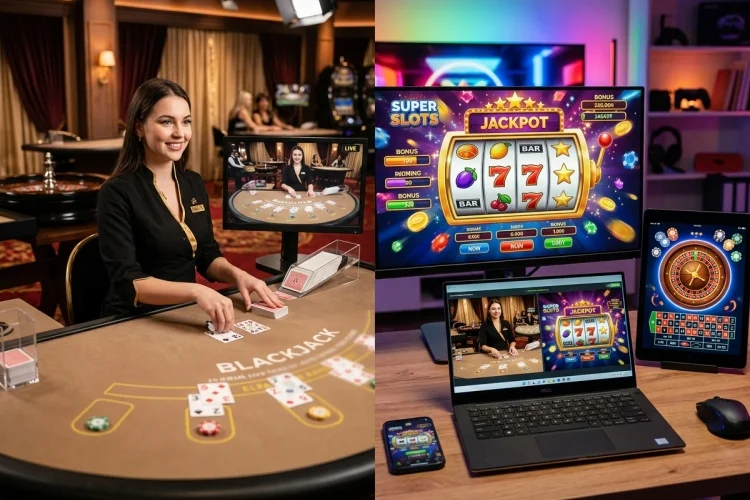
Online casino lobbies generally offer two very different experiences. One section may show real dealers shuffling cards under studio lights, while another is filled with animated slots, digital roulette wheels, and instant table games.
A Live Casino broadcasts physical gaming action in real time. Standard online games, meanwhile, normally use software and a random number generator to produce results.
Both formats are accessed through a website or mobile device, but the atmosphere, pace, and technical requirements can feel completely different.
Understanding those differences helps players choose a format based on personal preference rather than assuming one option is automatically better.
How Each Format Produces a Result
Live dealer games use physical cards, roulette wheels, shoes, or other equipment operated by a human presenter. The action takes place inside a secure studio and is streamed to remote players. Results are determined by what physically happens at the table.
Standard casino games usually rely on software. In slots, digital roulette, and automated blackjack, a random number generator selects an unpredictable outcome according to the game’s programmed rules.
In regulated markets, RNG output must be acceptably random and statistically testable. Adaptive systems that change outcomes based on previous payouts are not permitted under the UK Gambling Commission’s technical standard.
Speed and Playing Style
Standard games are generally the faster option. There is no need to wait for a dealer to shuffle, spin a wheel, announce a result, or complete decisions for other participants.
A digital blackjack hand can finish within seconds. At a live table, the same hand follows a natural casino rhythm, including a betting countdown and dealer actions.
That slower pace can be more relaxing for players who enjoy watching the process. Others may prefer the quick transitions and shorter sessions available in automated games.
Atmosphere and Social Interaction
The biggest advantage of live gaming is its human atmosphere. Players can watch a real host, hear announcements, and sometimes communicate through a moderated chat box.
This makes the experience feel closer to visiting a physical gaming venue. Games such as live blackjack, baccarat, and roulette may also offer several camera angles and professional studio presentation.
Standard titles are usually less social. However, they can be ideal when someone wants privacy, fewer distractions, or the freedom to play at an individual pace.
Game Variety and Availability
Digital casino libraries tend to contain a much larger selection. Software studios can create thousands of slots, instant-win titles, virtual table games, and unusual themes without building a physical studio for every release.
Live sections normally focus on familiar table games and hosted game shows. The range continues to expand, but each table requires studio space, equipment, trained staff, and broadcasting technology.
Some providers also combine the two styles. Evolution’s First Person range, for example, recreates casino tables with 3D animation and RNG-based outcomes rather than a live broadcast.
Mobile Performance and Internet Use
Both formats can work on phones, tablets, and desktop computers. Standard games are often lighter because they mainly load software graphics and sound.
Live tables continuously transmit video and audio. They therefore benefit from a stable internet connection and may use more mobile data.
Modern live products commonly use HTML5 to support desktop and mobile access with video streaming and interactive controls. Even so, a weak connection may cause delayed pictures or missed decision windows.
Betting Limits and Accessibility
Automated games often provide a wider range of stake sizes. Some digital titles allow very small wagers because one software-based game can serve many users independently.
A live table has physical operating costs and may therefore begin at a higher minimum. However, providers also offer low-limit and unlimited-seat tables designed for larger groups of online players.
Availability can depend on language, region, operating hours, and local law. Players should confirm that an operator is licensed to offer the selected games in their jurisdiction.
Is One Format Fairer?
Neither format is automatically fairer simply because it looks more transparent. A visible wheel can feel reassuring, but live studios still require proper procedures, auditing, equipment controls, and result recording.
Standard games need tested RNG software and accurate payout mathematics. Independent laboratories evaluate RNG unpredictability, game rules, and return-to-player calculations.
The operator’s licence, testing standards, published rules, and game provider are more important than whether the graphics are filmed or generated by software.
Managing Time and Spending
Fast digital rounds can make it easy to place many wagers within a short session. Live games move more slowly, but their social presentation may encourage users to remain at a table longer.
Set both a spending limit and an end time before starting. Reality-check facilities exist in some regulated markets to help customers keep track of gambling time.
Never treat either format as a dependable source of income. Different presentation styles do not remove the house advantage or guarantee a particular result.
Live Casino games offer human dealers, physical equipment, real-time broadcasts, and a more social atmosphere. Standard online titles provide faster rounds, broader game libraries, lower technical demands, and greater control over playing speed.
The better choice depends on what matters most to you. Choose live tables when you value interaction and realistic presentation, or select automated games when convenience and variety are the priorities.
Before participating, read the rules, verify the operator’s licence, test your device, and establish firm time and spending limits. Explore both formats carefully, but keep every session affordable, legal, and focused entirely on entertainment.